Žanjice
White pebbles on the Luštica peninsula, reached by boat or a dirt road.
Thirty-seven beaches from Herceg Novi to Ulcinj, described as they are — and with the latest state water-quality samples from 114 bathing points beside each one.
| Town | Sea |
|---|---|
| Herceg Novi | 28°C 82°F |
| Kotor | 26°C 79°F |
| Tivat | 28°C 83°F |
| Budva | 26°C 78°F |
| Bar | 27°C 80°F |
| Ulcinj | 27°C 81°F |
Measured through the day: Copernicus satellite data, and readings from the state bathing-water monitoring where a station is close enough.
Morsko Dobro, the state coastal agency, samples every public beach on the coast once a fortnight from late May to early October. In the latest round 114 points were tested.
| Water quality | Points |
|---|---|
| Excellent | 100 |
| Good | 9 |
| Sufficient | 5 |
Beaches are graded on E. coli and enterococci, as the EU Bathing Water Directive requires. “Excellent” and “good” both mean the water is safe to swim in.
Herceg Novi 6 · Kotor 4 · Tivat 5 · Budva 14 · Bar 4 · Ulcinj 4
White pebbles on the Luštica peninsula, reached by boat or a dirt road.
The bay next to Žanjice; the water here is exceptionally clear.
A fishing village at the mouth of the bay, where you swim from platforms.
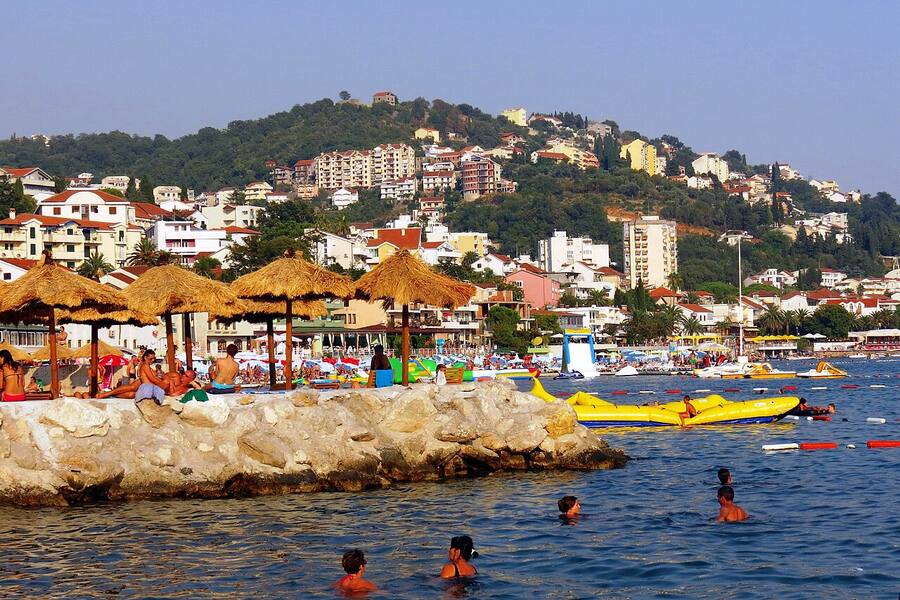
Known for its medicinal mud and the seafront promenade.
The westernmost beach in the country, right at the Croatian border.
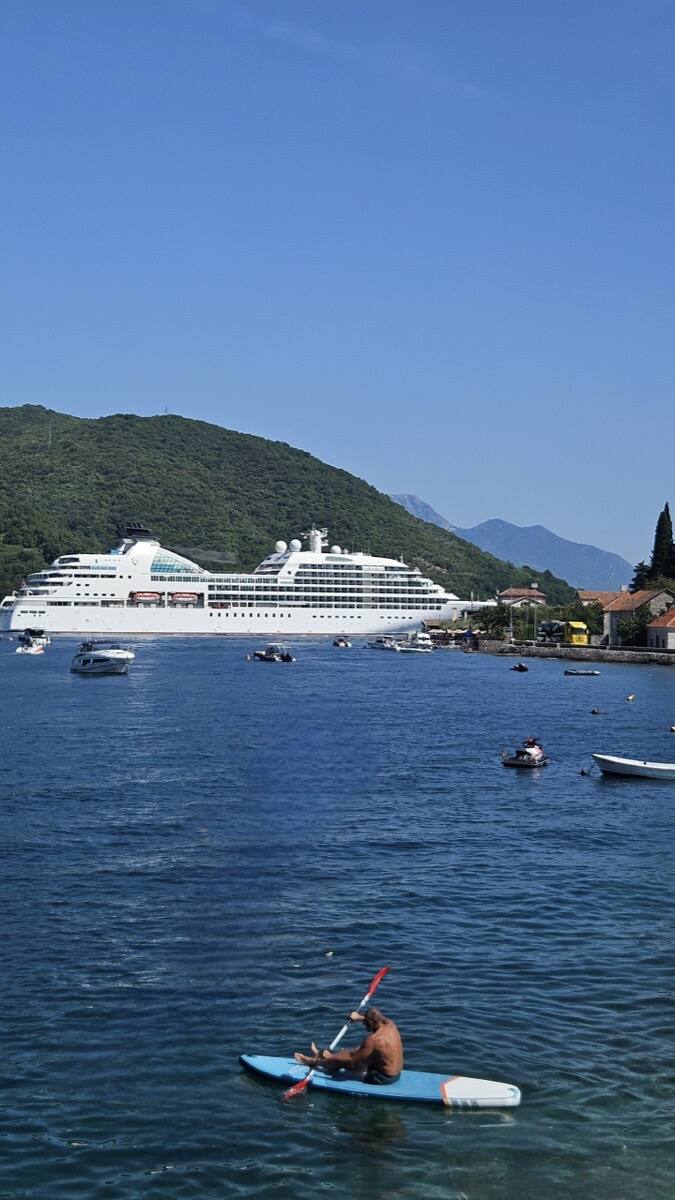
A village in the bay next to the shipyard: a gentle slope, calm water and noticeably fewer people than on the resort beaches.
Concrete platforms along the waterfront, with ladders into the water.
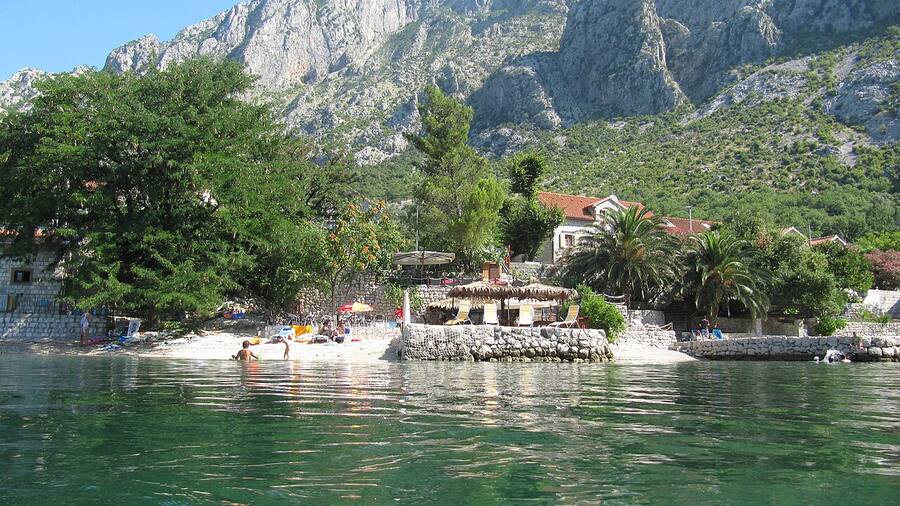
Quiet bays inside the fjord. The water is clear and noticeably cool — freshwater springs feed it.
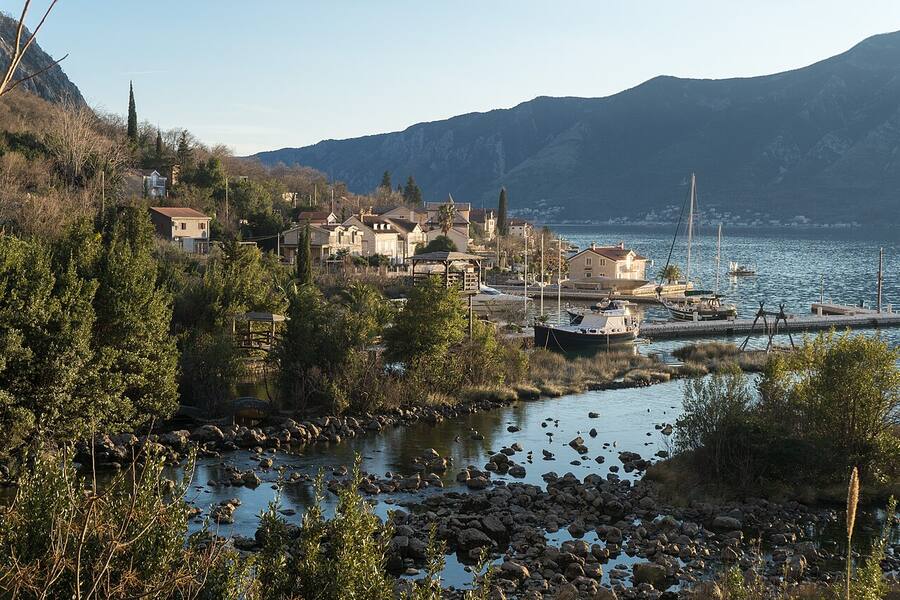
Platforms at the mouth of a mountain river, so the water is distinctly colder.
The far end of the bay: shallow, sheltered and calm.
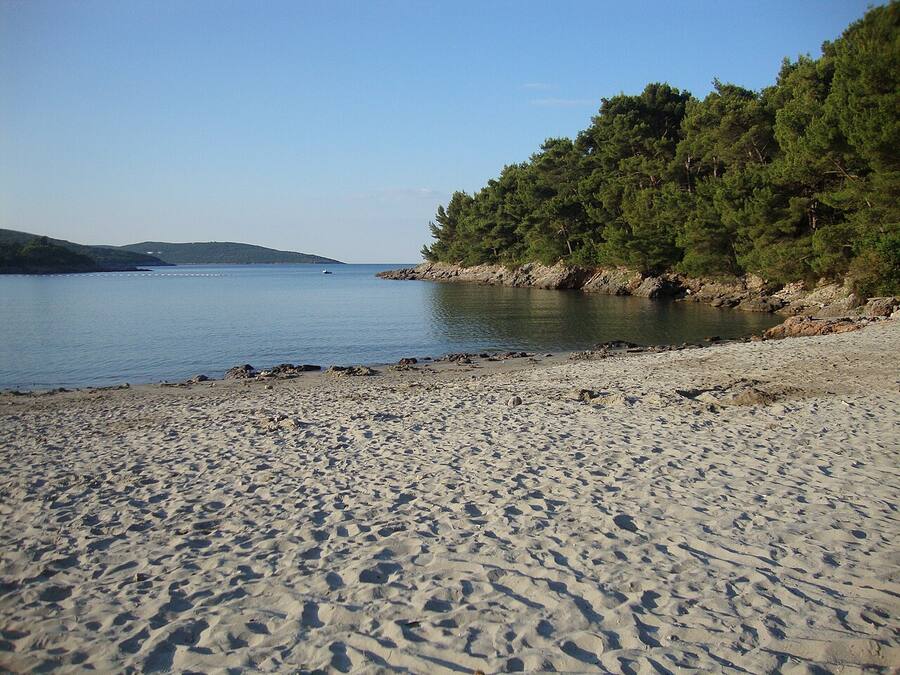
Fine sand and a gentle slope — the easiest beach here for small children. Pine trees give shade.
Tivat's town beach, a two-minute walk from the promenade.
A bay given over to beach clubs; both entry and sunbeds are paid.
Close to town, with a cafe and parking.
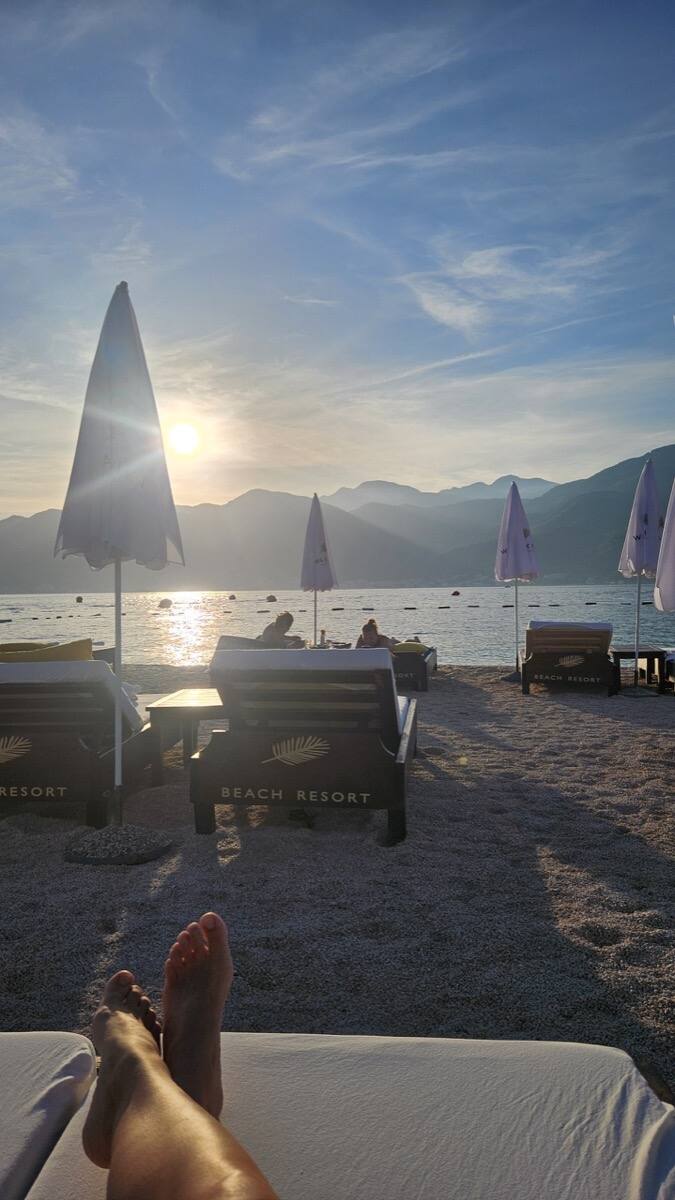
A beach club on the Tivat waterfront: sunbeds, a bar and a restaurant at the water's edge.
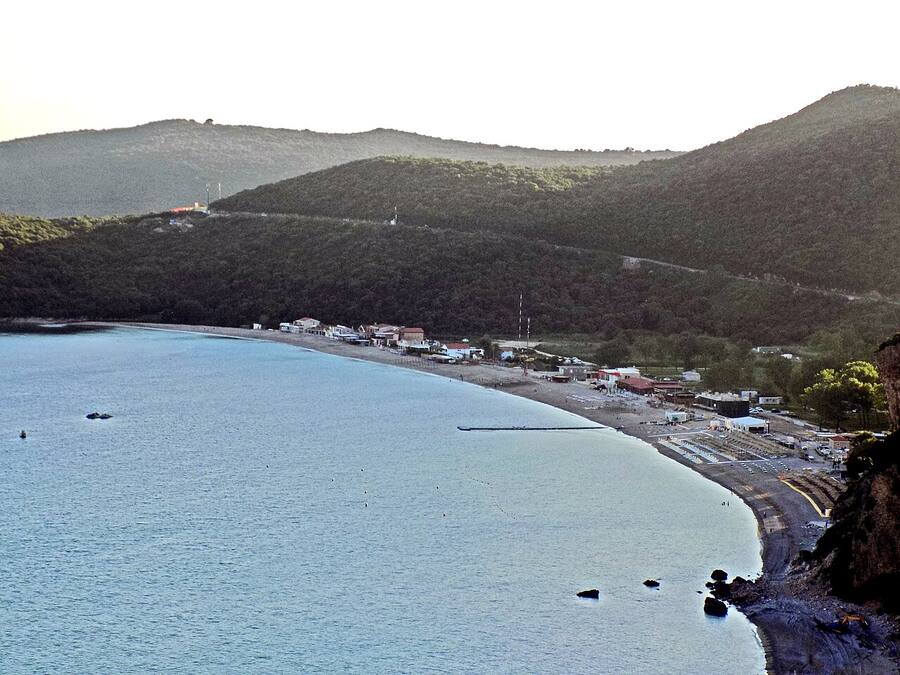
A large open beach outside town — one half organised, the other left as it is.
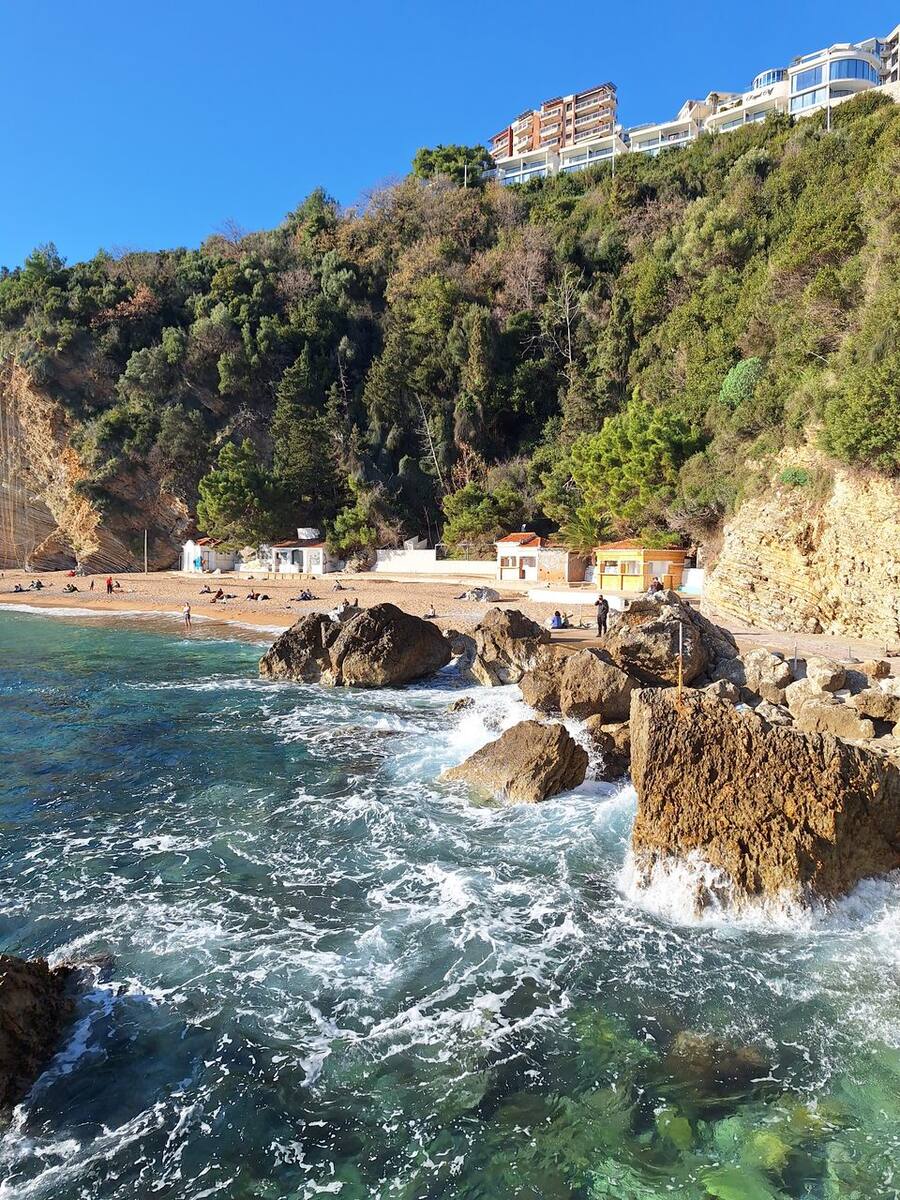
Two coves under the cliff, reached by a path from the old town.
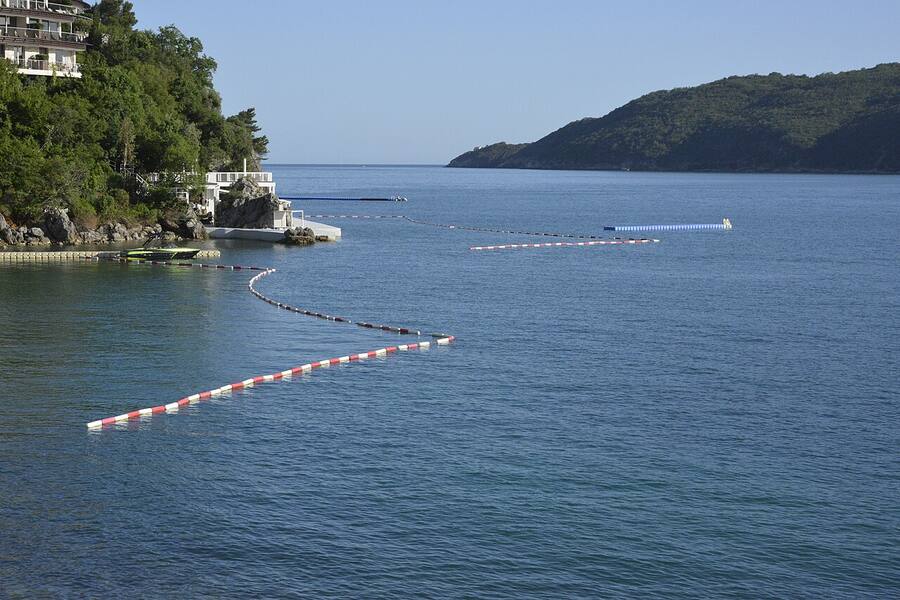
Budva's main town beach, with everything within reach.
Almost two kilometres of wide sand, hotels running the length of it.
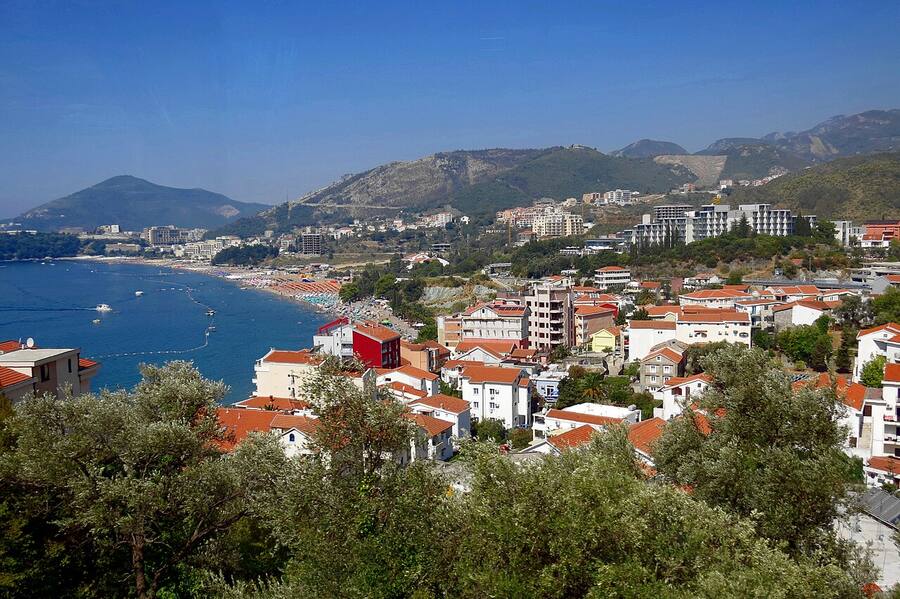
The continuation of Bečići, with fish restaurants right at the water.
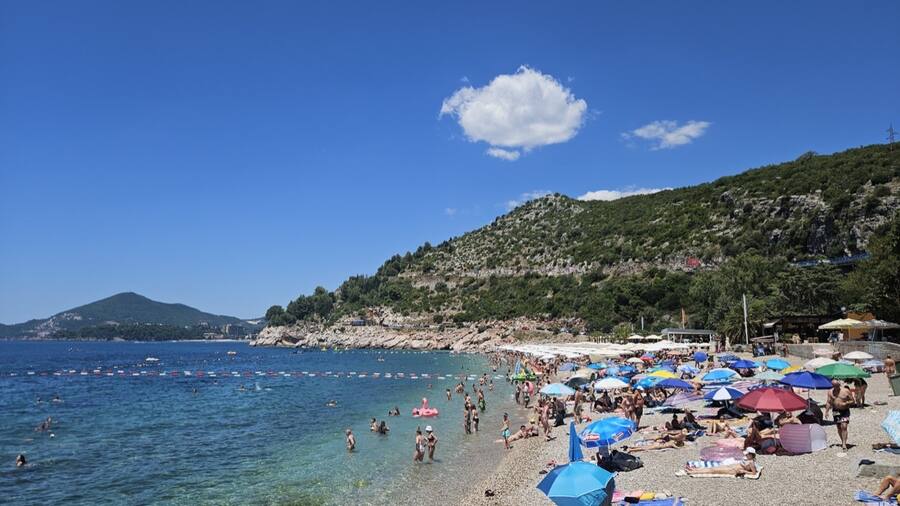
A compact bay of turquoise water between Bečići and Pržno.
A fishing village where the beach is wedged between the taverns.
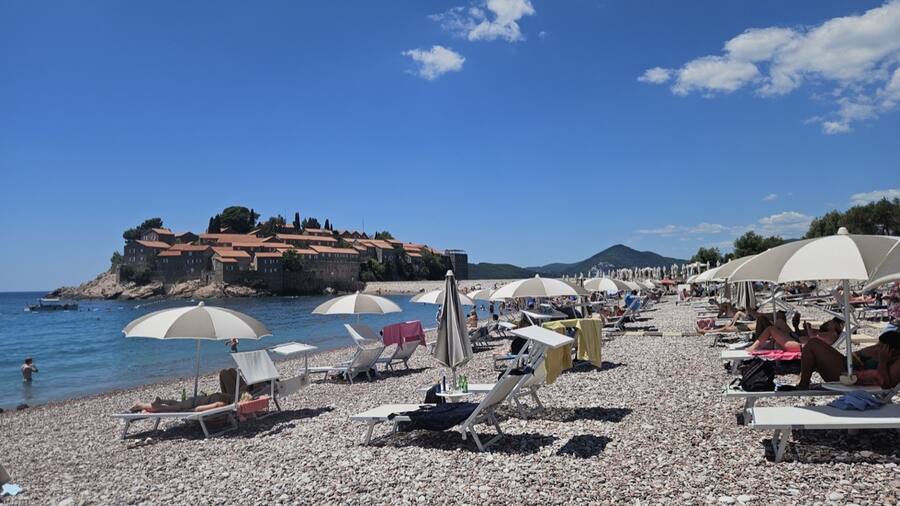
Pinkish pebbles beside the famous island; part of the beach belongs to the hotel.
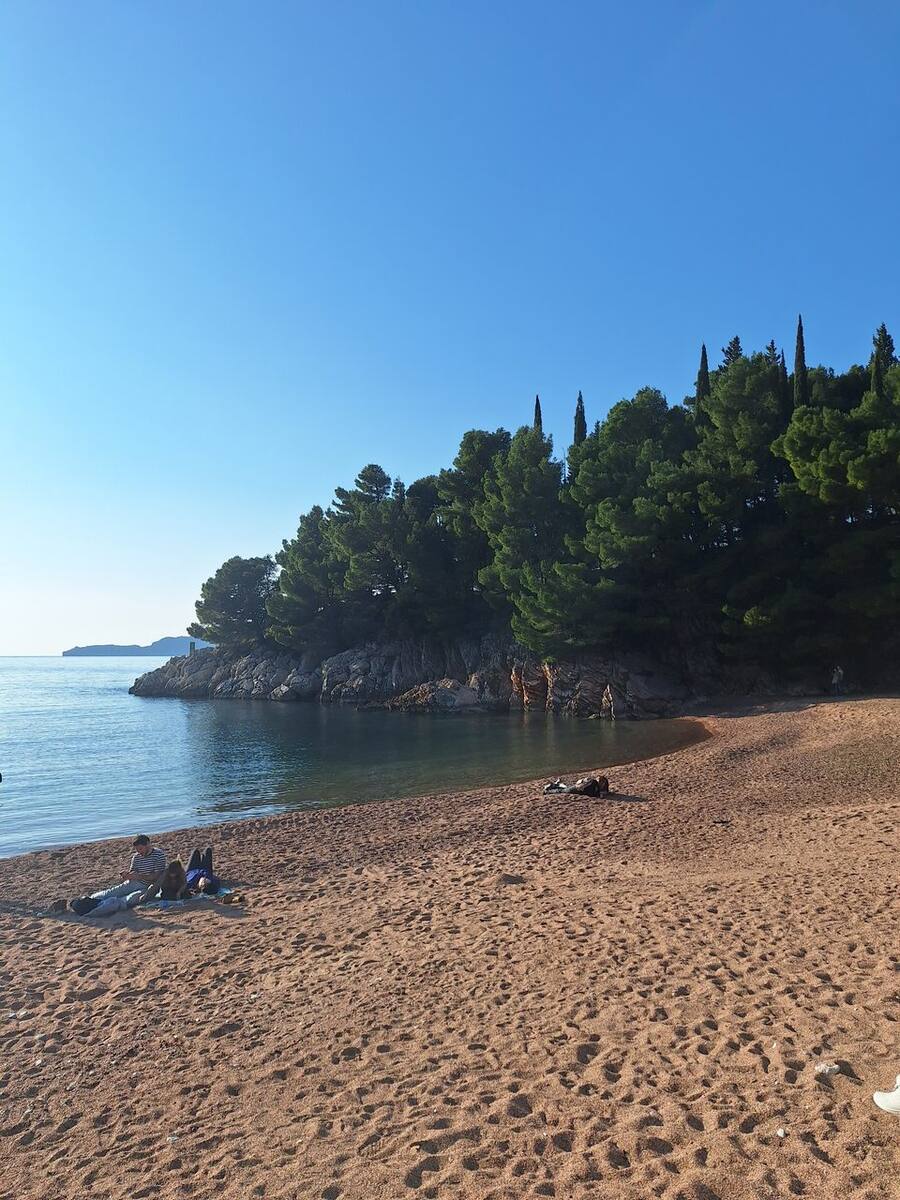
A small beach below Miločer park, between Pržno and Sveti Stefan. Fine pebbles, clear water; entry is paid and usually goes through the hotel.
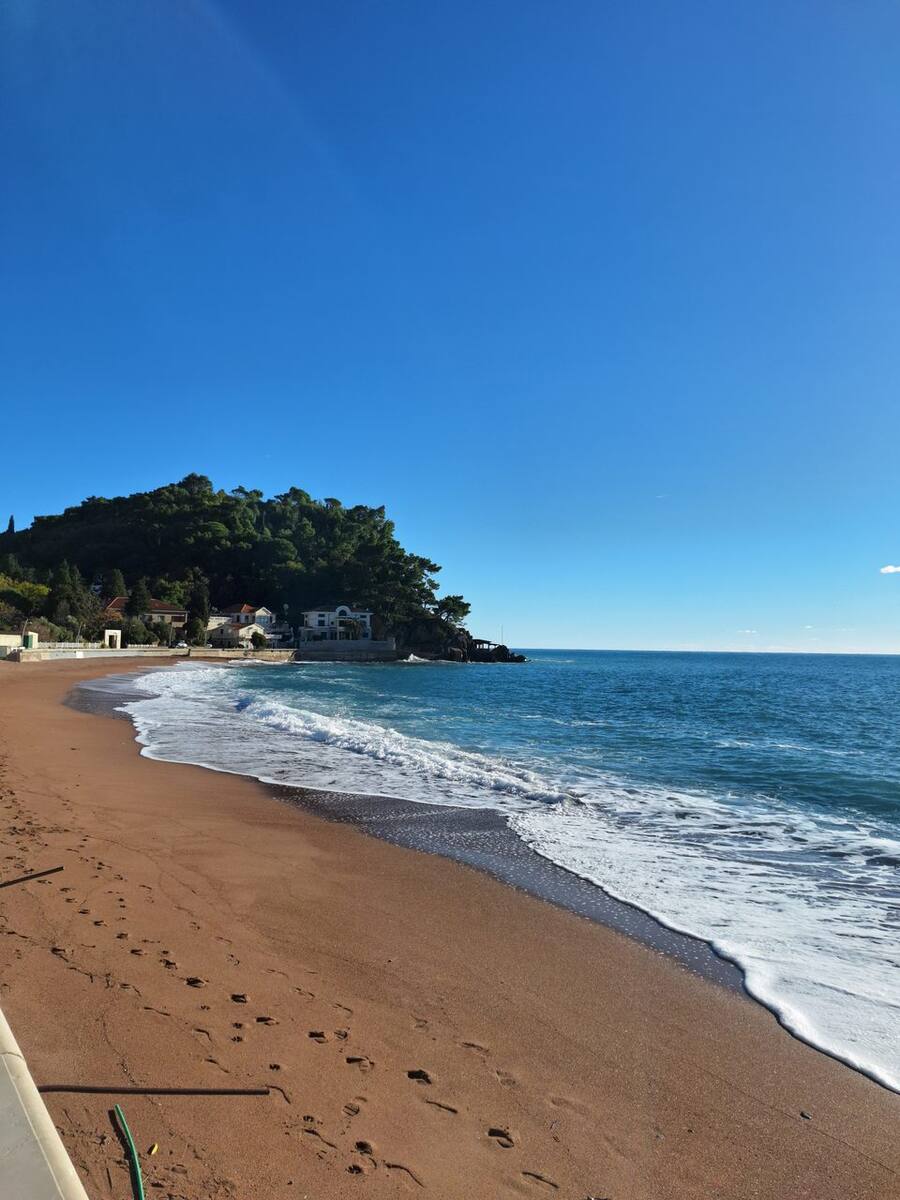
A resort town with a promenade and two islets facing it.
A bay in pine woods, fifteen minutes on foot from Petrovac.
A long undeveloped beach with almost nothing built on it.
A small sandy cove between Jaz and Budva.
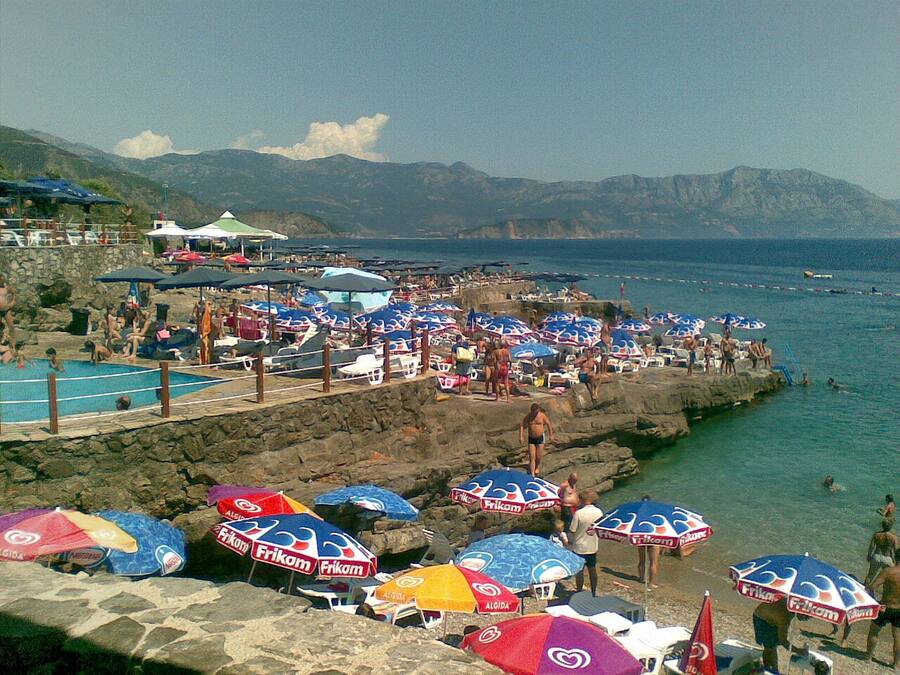
Concrete terraces with pools cut into the rocks, known for its parties.
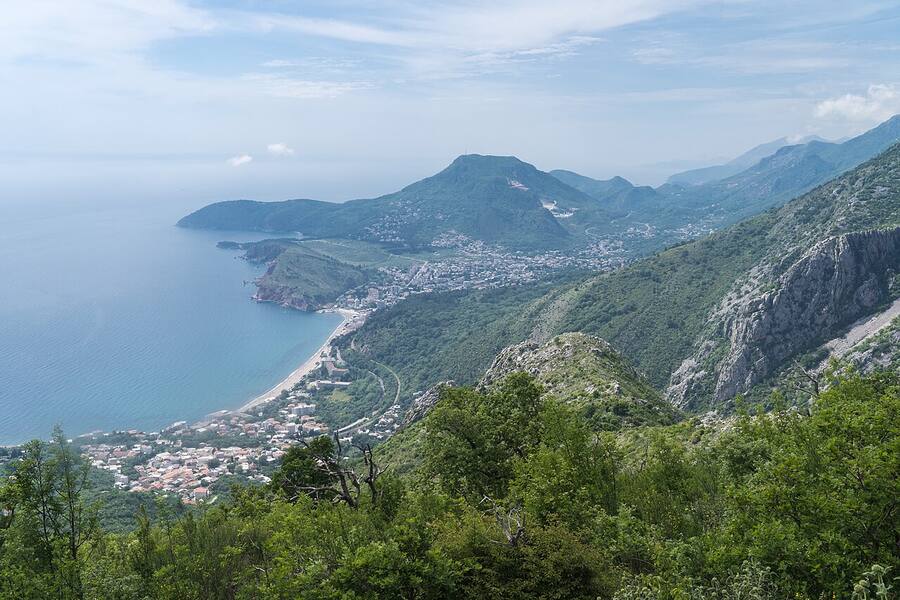
The busiest beach in the Bar area, with everything along the promenade.
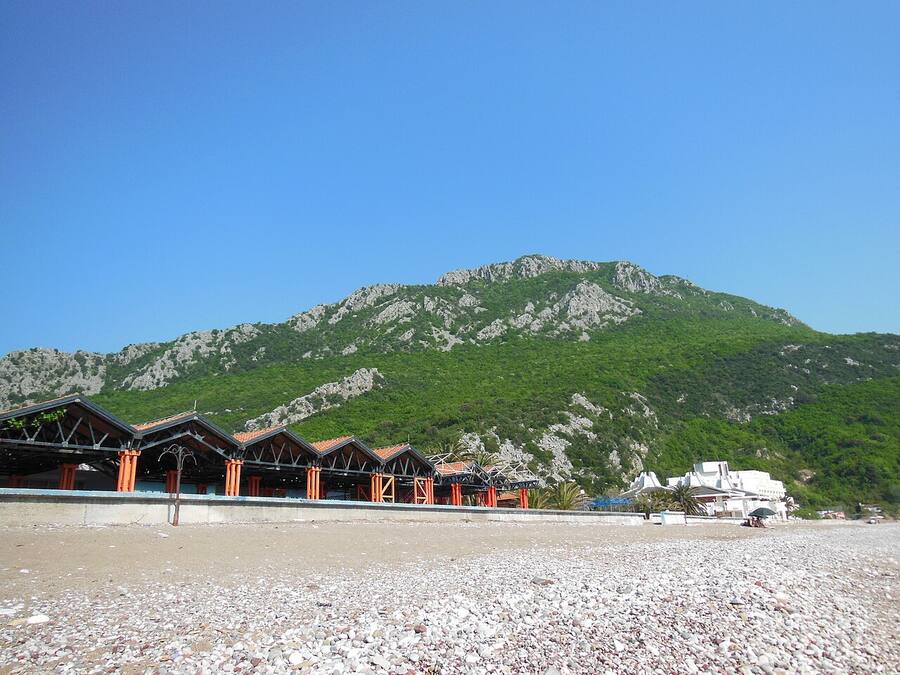
Fine pebbles in a sheltered bay, with the Red Beach next door.
A calm stretch of coast between Bar and Ulcinj.
Several small coves that stay uncrowded even in August.
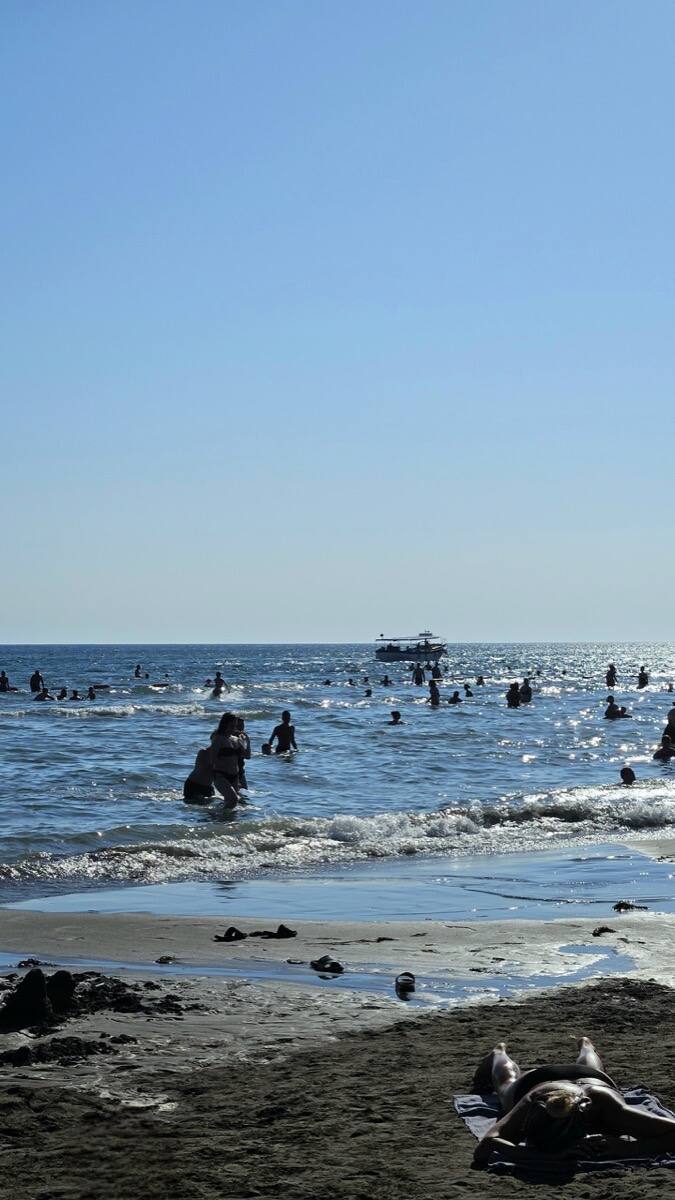
Thirteen kilometres of sand, shallow far from shore; the centre of kitesurfing in Montenegro.
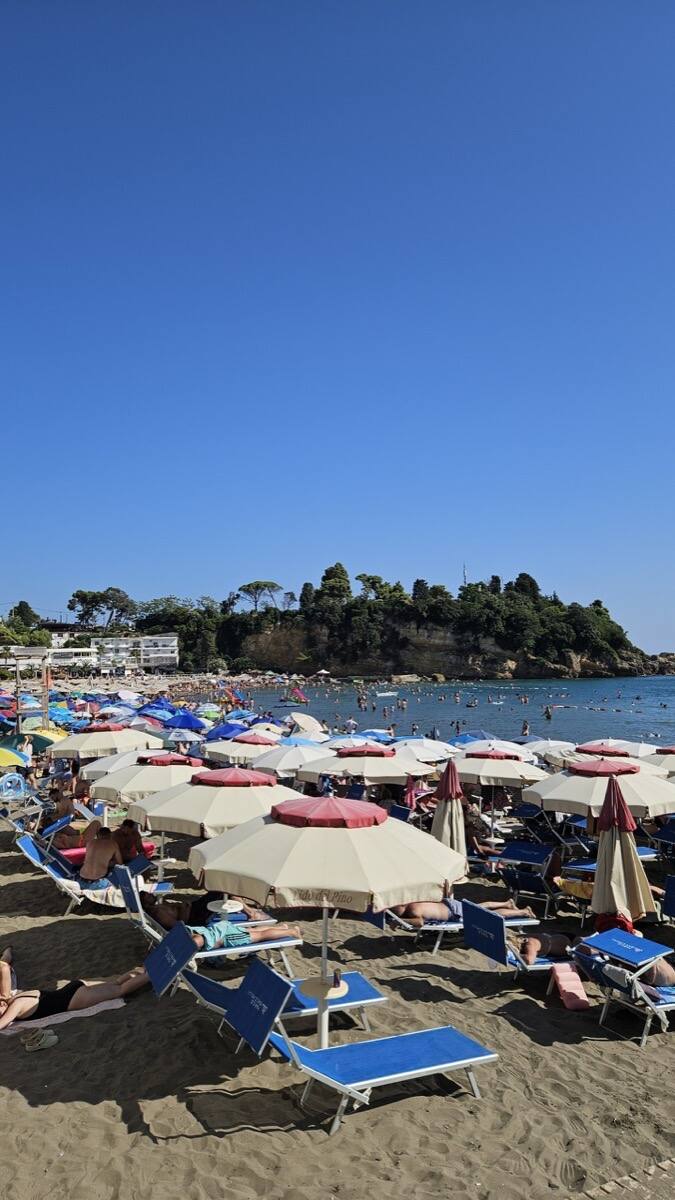
Ulcinj's town beach, directly below the old town.
An island between the arms of the river and the sea, with fish restaurants on stilts.
A bay in an olive grove — quiet and shaded.
Not many: most of the coast is pebbles and concrete platforms. Of the beaches listed here, 9 are genuinely sandy — Plavi Horizonti (Tivat), Mogren (Budva), Bečići (Budva), Rafailovići (Budva), Trsteno (Budva), Sutomore (Bar), Velika plaža (Ulcinj), Mala plaža (Ulcinj), Ada Bojana (Ulcinj). The longest stretch is Velika plaža in Ulcinj, thirteen kilometres of it, and the water there stays shallow a long way out. On pebble beaches water shoes make getting in much easier.
Yes. In the latest sampling round, of 114 bathing points tested, 100 were graded “excellent” and 9 “good”. Samples are taken by the state agency Morsko Dobro every two weeks through the season and graded to EU standards.
Access to the shore itself is free; what you pay for is a sunbed and umbrella, and the price depends on the beach and the month — in central Budva it is noticeably higher than a few bays away. Nobody stops you bringing your own towel, but in July and August free space on the organised stretches is scarce. Each beach here is marked as free, paid or partly paid.
The swimming season on the Adriatic runs from mid-June to the end of September, and many people rate September highest: the sea is still warm and the crowds have gone. Today’s water temperature for each town is in the table above — it comes from satellite measurements rather than an averaged table.
Plavi Horizonti near Tivat: fine sand, a gentle slope and pines for shade. Other gently shelving options are Jaz near Budva and Velika plaža in Ulcinj, where it stays shallow for tens of metres.
Also in English: Montenegro weather month by month. По-русски: пляжи Черногории.